
Why Your HVAC Business Isn’t Showing Up for Emergency Calls in Tulsa
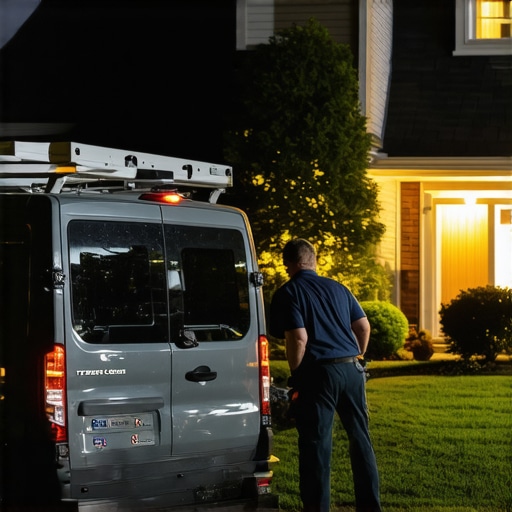
It’s 11:00 PM on a Tuesday in mid-July. Outside, the Tulsa humidity is thick enough to cut with a knife, and the temperature is still hovering near 90 degrees. Inside a home in Midtown, a family wakes up sweating because their central air unit just kicked the bucket. The homeowner doesn’t go to their desktop; they grab their smartphone and type “emergency AC repair Tulsa” into Google. In that high-stakes moment, the “Map Pack” – those top three local listings – is the only thing that matters. If your HVAC business isn’t in those top three spots, you don’t exist to that customer.
As an industry veteran, I’ve seen this scenario play out thousands of times. Research shows that 80% of customers hang up if they reach a voicemail during an emergency; they simply move down the list to the next provider. The first company to answer the phone wins a ticket that usually starts at $900 and can easily scale into a full system replacement worth $12,000. If you’re invisible on Google Maps, you aren’t just losing a “click” – you’re handing high-ticket emergency revenue directly to your competitors. In this guide, we will break down exactly why your Tulsa shop is being ghosted by Google and how to fix it for the 2026 search landscape.
Section 1: The High Cost of “Map Invisibility” in Oklahoma
In the Oklahoma HVAC market, timing isn’t just everything – it’s the only thing. The financial delta between a company ranking #3 on Google Maps and one ranking #11 is staggering. According to data from Epiphany Dynamics, roughly 35-45% of all HVAC service calls occur after-hours. When we look specifically at Tulsa during a summer heatwave or a January deep freeze, that after-hours call volume can spike by as much as 300%.
The “Emergency Economy” is driven by urgency. Unlike a planned maintenance check-up where a customer might research five different companies, an emergency caller is looking for the fastest path to relief. Because Google Maps dominates the mobile screen, it acts as the primary gatekeeper for these leads. If your google business profile seo isn’t optimized to capture this “near me” intent, you are essentially operating with one hand tied behind your back.
Consider the math: If you miss just three emergency calls a week because you aren’t in the 3-pack, and each call has a conservative lifetime value of $2,500 (including the initial repair and future service), you are losing $390,000 in annual revenue. This is why many owners see their google maps lead generation tools showing high impressions but low conversion – the visibility isn’t happening when the stakes are highest. For a deeper dive into this discrepancy, see our article on [Why Your Google Profile Impression Numbers Aren’t Booking More Tulsa Services]. Map invisibility is a silent killer of growth for Tulsa contractors who rely on high-margin emergency work to balance their seasonal books.
Section 2: The Proximity Paradox, Why Being “Closest” Isn’t Enough
One of the most common complaints I hear from Tulsa HVAC owners is: “My shop is right off I-44, but a guy in Jenks is outranking me for searches in Midtown. How is that possible?” This is known as the Proximity Paradox. While Google used to prioritize the literal distance between the searcher and the business, the 2026 algorithm uses a much more complex “Proximal Filtering” system.
Google’s “Invisible Map Filter” is designed to prevent one company from dominating an entire city just because they have a central office. However, it also filters out businesses that it deems “less relevant” or “less authoritative” than competitors further away. If a competitor 5 miles away has higher “Prominence” (a combination of review velocity, backlink strength, and local engagement), Google will happily skip over your shop located only 1 mile away to show the more “trusted” option. This is a primary reason local seo for hvac has become so competitive in the Tulsa metro area.
Furthermore, if your business address is shared with other entities or if you are using a virtual office near the BOK Center to try and “game” the system, Google’s AI will often suppress your listing entirely. To understand how your location data might be working against you, check out [Why Local Plumbers Lose 3-Pack Spots to Shops Five Miles Away] and [The Hidden Reason Your Tulsa Shop Only Shows Up When You Zoom In]. Understanding that proximity is a flexible metric is the first step toward reclaiming your territory.
Section 3: 2026 Ranking Signals, Beyond the Basics
To rank higher on google maps in 2026, you have to look beyond just filling out your profile. Google now uses advanced Natural Language Processing (NLP) to categorize your business based on the “Attributes” you select and the content you publish. Many Tulsa HVAC companies make the fatal mistake of choosing “HVAC Contractor” as their only category. While accurate, it’s often too broad for specific emergency searches.
In the current landscape, the “Air Conditioning Repair Service” or “Heating Contractor” categories carry massive weight for specific seasonal searches. More importantly, the “24/7” attribute is no longer just a toggle switch; Google cross-references your stated hours with your website content, your review mentions, and even your responsiveness to Google Messages. If your profile says you are open 24/7 but your website mentions “Office Hours: 8-5,” the algorithm sees a conflict and may drop you from emergency search results to avoid a poor user experience.
Effective google business profile optimization now requires a “Hyper-Local” approach. This means your profile should be updated with “Local Posts” that mention specific Tulsa landmarks or neighborhoods like Cherry Street, Brookside, or the Pearl District. When Google sees you are active in specific zip codes, it increases your “relevance” for those areas. If you feel your category selection is off, read [Why Your Primary Category is Sabotaging Your Tulsa 3-Pack [2026]] to learn how to rank google business profile listings for maximum seasonal impact using a professional google maps ranking service.
Section 4: The Review Gap, Quality, Velocity, and Keywords
We all know reviews are important, but the way Google weighs them has fundamentally shifted. Gone are the days when having the “most” reviews guaranteed a top spot. In 2026, the algorithm prioritizes three specific metrics: Review Velocity, Review Sentiment, and Keyword Richness. This is where the “Review Gap” happens for many Tulsa shops.
If you have 500 reviews but they are all five years old, your “Velocity” is zero, and Google considers you a stagnant business. Conversely, if you get 50 reviews in one week and then none for a month, it looks like “review spam.” A steady stream of fresh feedback is required to rank google business profile listings consistently. Furthermore, one-word reviews like “Great!” or “Thanks!” do almost nothing for your SEO. Google’s AI is looking for specific service-location clusters. A review that says, “They provided excellent emergency furnace repair in Broken Arrow on a Sunday night,” is worth ten generic five-star ratings.
This is why gmb ranking service strategies now focus on “Review Mining.” You must coach your technicians to ask for specific mentions of the service performed and the neighborhood. When your profile is filled with mentions of “emergency,” “AC repair,” and “Tulsa,” you become the mathematical choice for Google to display. For more on this, read [How Customer Review Length Actually Changes Your Tulsa Map Rank] and [Why One-Word Reviews are Dragging Down Your Tulsa Map Rank].
Section 5: Technical Failures, Citations and Schema
While the front end of your Google Business Profile might look great, technical “rot” in the background can lead to google business profile not showing up. The most common technical failure is NAP (Name, Address, Phone) inconsistency. If your shop is listed as “Tulsa Comfort Pros” on Google, but “Tulsa Comfort Professionals, LLC” on a local Tulsa directory or the Better Business Bureau, Google’s confidence in your data drops. A single phone number typo on an old directory can “ghost” your listing during high-competition hours.
Another critical technical element is Local Business Schema. This is a snippet of code on your website that tells Google’s spiders exactly what your business does, where you are, and what your hours are in a language the AI understands perfectly. Without proper Schema markup, Google has to “guess” at your service area. In 2026, if Google has to guess, you lose. Implementing advanced Schema can be the difference between being #4 (the first loser) and #1. Use a google business profile audit tool to check for these errors. For a technical breakdown, see [The Specific Schema Markup That Finally Pushed Our Tulsa Listing into the 3-Pack].
Section 6: The 2026 Strategy, Dominating the Tulsa Map Pack
If you want to stop losing emergency calls, you need a proactive strategy that goes beyond the basics. Here is the 2026 checklist for Tulsa HVAC dominance:
- Video Verification & Content: Google now prioritizes profiles with “Video Posts.” Upload a 30-second clip of your truck in front of a Tulsa landmark or a tech explaining a common AC issue. It proves you are a real, local entity.
- Geo-Tagged Photos: When you take photos of a completed job in Owasso or Bixby, ensure the GPS metadata is intact. Uploading these to your profile tells Google exactly where your “boots on the ground” are.
- Hyperlocal Content: Use your Google Posts to talk about Tulsa-specific weather events. Mentioning the “Green Country humidity” or “Oklahoma ice storms” signals to the AI that you are a local expert.
- Zero-Latency Responses: In 2026, the speed at which you respond to Google Messages and reviews is a direct ranking signal. Use local seo tools or local seo software to automate alerts so you never miss a beat.
For more advanced tactics, check out [4 Local SEO Strategies Oklahoma Shops Must Use in 2026]. By following this roadmap, you move from being a “passive” listing to an “active” local authority that Google trusts to handle its users’ emergencies.
Conclusion & CTA
In the Tulsa HVAC market, visibility is not a luxury – it is the lifeblood of your emergency service department. When a homeowner’s AC fails in the middle of a June night, they aren’t looking for the “best” website; they are looking for the most visible solution. If you aren’t in the Map Pack, you are essentially ceding your market share to competitors who may not even provide better service than you – they just have better digital real estate.
Don’t let another high-ticket emergency call go to your competitor. Visibility is a choice, and in 2026, it requires a technical, data-driven approach. Use a google maps rank tracker to see where you truly stand across the Tulsa metro area and start your journey toward the top of the 3-pack today.