
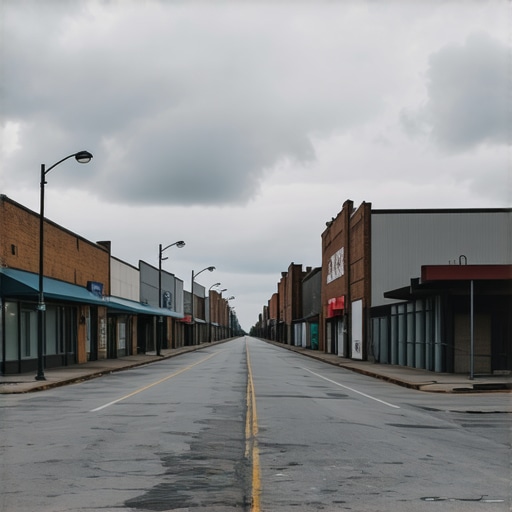
Why Your Tulsa City Pages Feel Like Ghost Towns to Google (The 2026 Reality Check)
You’ve seen it happen dozens of times. You build out a beautiful set of location landing pages for Broken Arrow, Owasso, and Bixby, hoping to dominate the Oklahoma landscape. You optimize the headers, tweak the meta tags, and wait. But months later, your city page seo efforts have yielded nothing but a digital “ghost town.” These pages exist, but they receive zero traffic, zero clicks, and zero leads. In 2026, the local search landscape has shifted fundamentally. Google no longer rewards the mere existence of a page; it rewards entity legitimacy. If Google’s AI-driven algorithms don’t perceive your business as a verified, active entity within those specific geographic coordinates, your pages are essentially invisible.
The old days of “tricking” the algorithm are over. Today, Google evaluates whether a business is a legitimate entity across the entire web, not just a list of keywords on a static page. As a Tulsa SEO expert, I’ve watched many local businesses struggle because they are still using 2020 tactics in a 2026 world. To rank in the modern era, you need a strategy that integrates google business profile seo with deep, hyperlocal relevance that proves to Google you are actually “there,” even if you don’t have a physical storefront in every suburb.
The Death of the “Find-and-Replace” City Page
For a long time, the standard operating procedure for city page seo was simple: create one master template, then use a find-and-replace tool to swap “Tulsa” for “Jenks” or “Sand Springs.” In 2026, this is a recipe for disaster. Google’s Search Generative Experience (SGE) and AI Overviews have become incredibly sophisticated at filtering out repetitive, low-value location pages. When the content is 95% identical across twenty different URLs, Google flags it as “Thin Content.”
The algorithm now looks for unique value. If your Broken Arrow page doesn’t mention specific neighborhoods like Forest Ridge, or your Owasso page doesn’t reference the Smith Farm Shopping Center, Google knows you’re just mass-producing pages. This is the primary reason Why Those Thin City Landing Pages Are Actually Killing Your Tulsa Local Reach. Instead of helping you rank, these pages create a “content debt” that can actually drag down the authority of your entire domain. Google prefers one high-authority page that covers a region over twenty “ghost” pages that offer no local insight.
To fix this, every city page must be a unique resource. Think of it as a local guide. You need to include local testimonials, photos of projects completed in that specific zip code, and even mentions of local weather patterns or soil types (if you’re a contractor). This level of detail is what signals google business profile authority to the search engine, proving that you aren’t just a digital ghost, but a local fixture.
Proximity vs. Authority: Why You’re Losing the Tulsa 3-Pack
The “Proximity, Relevance, Prominence” triad remains the foundation of local search, but the weights have shifted. In the past, proximity was king – if you were the closest business to the searcher, you usually won. Today, “Digital Authority” can often override physical distance. This is why you might see a competitor from South Tulsa ranking in the 3-pack for a search performed in Downtown, while your shop – which is only three blocks away – is nowhere to be found.
This phenomenon occurs because Google’s local map pack seo now prioritizes engagement signals. If a business has a higher click-through rate, more frequent “Request a Quote” interactions, and more “Verified Video” uploads, Google views them as a more prominent entity. Service Area Businesses (SABs) are particularly vulnerable here. Research in 2026 shows that SABs often only rank near their physical verification point unless they have significantly boosted engagement signals. To see where you truly stand across the metro area, using a google maps rank tracker is essential. It reveals the “proximity heat map” of your rankings, showing exactly where your authority drops off.
To rank google business profile listings effectively in 2026, you must bridge the gap between where you are and where your customers are. This requires more than just a google maps ranking service; it requires a holistic approach to local business seo that builds prominence through consistent, high-quality digital interactions. If your “ghost town” pages aren’t driving people to your map listing, they are failing their primary objective.
Hyperlocal Signals: Beyond the NAP
For years, SEOs preached the importance of NAP (Name, Address, Phone number) consistency. While still a baseline requirement, NAP is no longer a competitive advantage. To dominate local seo services in Oklahoma, you must move into the realm of hyperlocal seo. This means generating signals that are uniquely tied to the Oklahoma landscape.
Google’s 2026 algorithm places immense weight on local mentions and Oklahoma-specific backlinks. A link from the Tulsa World or a sponsorship mention on a local youth soccer league website carries more “local weight” than a high-authority backlink from a national blog. These signals tell Google that you are an integrated part of the community. Understanding How Local Backlinks Actually Change Your Position on the Oklahoma Map is crucial for anyone trying to break out of a ranking plateau.
Furthermore, google maps seo now factors in “geo-tagged” engagement. When customers in Bixby open your website or click your call button, Google logs that geographic data point. If all your engagement comes from one small radius, your “ghost town” pages in other cities will stay dead. You need to actively encourage engagement from the specific suburbs you are targeting to signal to Google that your business is relevant to those residents.
The 2026 Entity Factor: Google’s New Local Algorithm
In 2026, Google doesn’t just crawl your site; it “understands” your business as an Entity. This is a shift from city page seo based on strings (text) to seo based on things (entities). An entity is defined by its relationships: your business is related to its category, its physical location, its employees, and its customer reviews. If these relationships aren’t clearly defined through Schema markup and consistent cross-platform data, Google perceives your business as a low-confidence entity.
One of the biggest “entity winners” in 2026 is Verified Video. Google now allows and encourages businesses to upload short, verified videos directly to their Business Profile and city pages. These videos – showing a plumber fixing a leak in a Midtown basement or a lawyer standing in front of the Tulsa County Courthouse – provide irrefutable proof of existence and service. Data shows that “being clicked is more valuable than being seen.” High engagement-driven SEO, fueled by video and interactive content, is what moves the needle in the 3-pack today.
If your city pages are just walls of text, they aren’t feeding the entity engine. You need to integrate reviews that mention the city name, photos with EXIF data (though Google’s ability to read location from image content has surpassed EXIF), and interactive maps. This creates a “trust cluster” that helps you rank google business profile listings for competitive terms.
Industry Spotlight: Contractors, Lawyers, and Plumbers
Different industries require different approaches to city page seo. For contractors and plumbers, the challenge is often the “Service Area Business” (SAB) designation. Since you don’t have a storefront in every city, your city pages must work twice as hard to prove relevance. You should focus on “Service Area” settings within your profile, but more importantly, you need to document your work geographically. A dedicated section for “Recent Projects in Broken Arrow” with actual photos and customer quotes is worth more than 1,000 words of generic marketing copy. If you’re struggling with this, learn How to Rank Your Service Area Business in Oklahoma Cities Without a Storefront.
For lawyers, the game is Topical Authority. A Tulsa personal injury lawyer shouldn’t just have a “Jenks Personal Injury Lawyer” page; they should have a page discussing the most dangerous intersections in Jenks or how Jenks police reports are filed. This demonstrates local expertise that Google’s AI Overviews love to cite. It transforms a “ghost town” page into a community resource.
Regardless of your niche, the goal is to move away from generic local seo services and toward a strategy that treats every Oklahoma suburb as its own unique market. The businesses that treat Bixby, Owasso, and Sand Springs as distinct entities – not just keyword variations – are the ones that will dominate the 2026 search results.
How to Audit Your Ghost Town Pages
If you suspect your pages are suffering from the “ghost town” effect, it’s time for a technical audit. First, check for “Proximal Filtering.” This happens when Google decides your page is too similar to another nearby result and hides it from the main search results. If you search for your service in a specific city and have to click “Show omitted results” to find your page, you have a major content duplication problem.
Next, use a google business profile audit tool to see how your profile interacts with your city pages. Are your pages linking back to your GMB posts? Are your GMB posts mentioning the specific cities you’re targeting? There should be a “closed loop” of information between your website and your Google profile. If these two assets aren’t talking to each other, Google won’t give you the google business profile authority needed to rank in the 3-pack.
Finally, look at your engagement metrics in Search Console. If your city pages have high impressions but near-zero clicks, your meta titles and descriptions are likely the problem. They need to be more than just “Plumber in Tulsa.” They need to offer a reason to click, such as “24/7 Emergency Plumbing in Tulsa – 500+ 5-Star Reviews.”
Conclusion: Moving from Invisible to Essential
The “Ghost Town” effect is a symptom of an outdated SEO mindset. In 2026, city page seo is no longer about filling a bucket with keywords; it’s about building a digital footprint that is so locally relevant that Google cannot ignore it. By focusing on entity recognition, unique hyperlocal content, and high-engagement signals like verified video, you can breathe life back into your Oklahoma location pages.
Stop letting your competitors in the 3-pack steal leads that should be yours. Whether you are a contractor in Broken Arrow or a lawyer in Downtown Tulsa, your digital presence must reflect your real-world expertise. It’s time to move from being invisible to being essential. Get a professional audit today and start turning those ghost towns into thriving lead-generation machines.